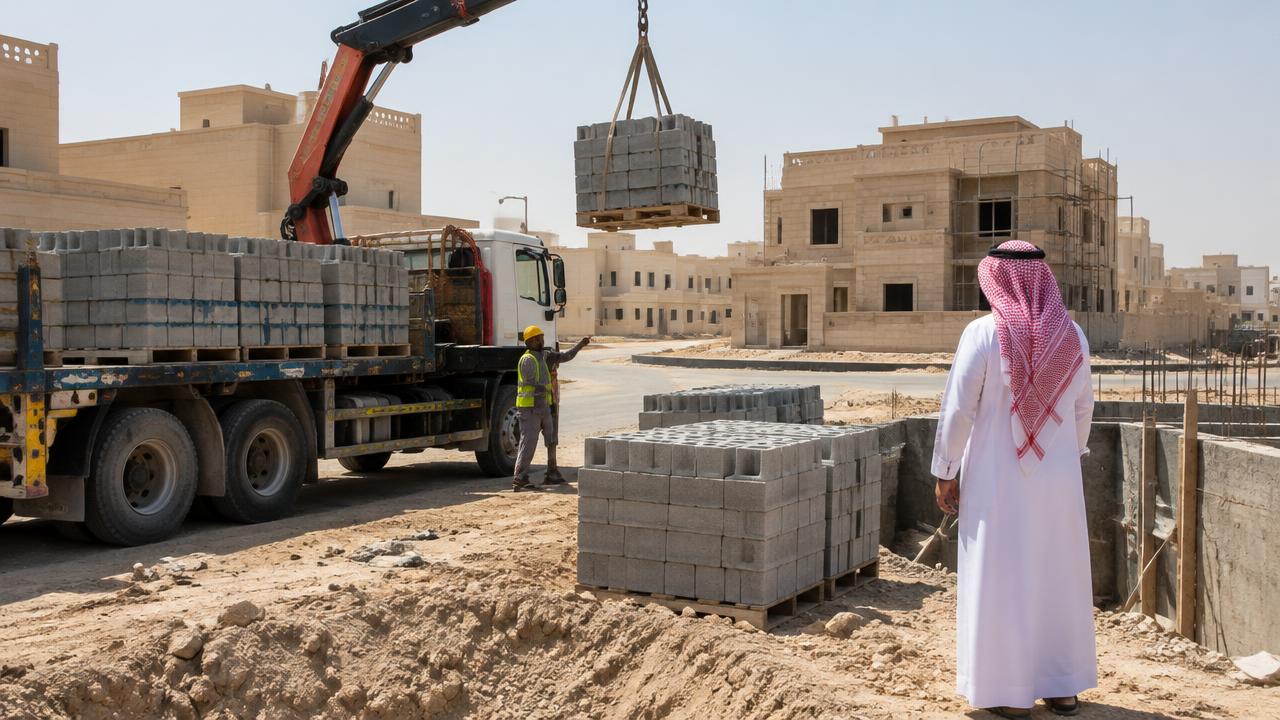
How to Move Stock Between Branches and Warehouses in Riyadh
By Mohamed Ahmed, Co-founder, Markaby
8 min read
Short answer: set up scheduled, multi-stop runs instead of booking a truck every time a branch runs low. Pick the vehicle by the size of a typical run (a van for cartons, a Dyna for a few pallets, a lorry for full restocks). Fix pickup times at the warehouse. Sequence drops by area and branch opening hours. Require photo proof of delivery at every stop. Pay one monthly invoice that lists each trip. Done well, branch transfers become a routine your team barely thinks about.
Reading time: 8 minutes
Contents
- Why branch transfers deserve their own process
- Step 1: map your flows
- Step 2: choose vehicles by run, not by order
- Step 3: build multi-stop routes across Riyadh
- Step 4: fix the schedule
- Step 5: proof of delivery and stock reconciliation
- Compliance and paperwork
- A run-sheet template you can copy
- How Markaby supports branch transfers
- FAQ
1. Why branch transfers deserve their own process
Retailers, pharmacies, roasters, bakeries, building-materials traders and distributors in Riyadh often run several branches from one central warehouse. Moving stock between them looks simple, but ad-hoc transfers create the same problems again and again:
- A branch runs out of a best-seller while the warehouse has plenty.
- A driver is booked for one branch, then booked again an hour later for the branch next door.
- Nobody can confirm what actually arrived, so stock counts drift.
- Finance receives dozens of small receipts with no link to transfer orders.
Riyadh has a large and growing base of multi-branch businesses. The Kingdom has around 1.7 million SMEs (Al Arabiya), and the Riyadh region has historically taken the largest share of new SME registrations (Al Eqtisadiah). For these businesses, a reliable transfer routine is a quiet competitive advantage.
2. Step 1: map your flows
Before you talk to any transport provider, draw your network on one page:
- Origins: the warehouse or warehouses, and any supplier pickups.
- Destinations: every branch, showroom, café or site, with its district.
- Frequency: how often each destination needs stock (daily, three times a week, weekly).
- Typical volume: cartons, pallets or weight per delivery.
- Time windows: when each branch can receive goods (before opening, after the lunch break, etc.).
- Return flows: empty crates, returns, damaged stock, cash or documents.
This map usually shows that 70–80% of your transfers follow a predictable pattern. That's the part to schedule.
3. Step 2: choose vehicles by run, not by order
Size the vehicle for the whole run, not for one branch's order.
| Typical run | Example | Vehicle |
|---|---|---|
| Small cartons to 3–6 branches | Pharmacy restock, cosmetics, phone accessories | Van (up to 800 kg) |
| A few pallets to 2–5 branches | Coffee beans, packaged food, homeware | Dyna (up to 3 t) |
| Full restock to several large branches | Furniture, appliances, building materials, water | Lorry (up to 10 t) |
| Bulk transfer between two warehouses | Seasonal stock, relocation | Lorry or flatbed (up to 24 t) |
For more detail on each class, see Dyna vs Lorry vs Flatbed vs Trailer.
Tip: if your runs vary a lot by day, it's often cheaper to schedule a van for daily runs and add a Dyna or lorry once a week for the heavy restock, rather than sending a big truck every day.
4. Step 3: build multi-stop routes across Riyadh
Riyadh is big, and traffic patterns matter. A few principles:
- Cluster by area. Group branches in the north (Al Malqa, Al Yasmin, Hittin), centre (Al Olaya, Al Malaz) and south and east (Al Aziziyah, Al Sulay, Al Naseem) into separate runs instead of zig-zagging across the city.
- Respect receiving windows. Put branches that open early at the start of the route.
- Avoid peak-hour crossings. Heavy cross-city legs are easier early in the morning or mid-afternoon.
- Keep runs realistic. Six to ten stops per van run is usually manageable within a working window; heavier vehicles take longer at each stop.
- Plan the return leg. Collect returns and empty crates on the way back instead of booking a separate trip.
5. Step 4: fix the schedule
Once routes are clear, lock them in:
- Fixed pickup times at the warehouse, for example 7:30am for the north run and 1:00pm for the south run.
- A daily cut-off for branch requests, for example by 9pm the night before.
- A weekly heavy run for bulky stock.
- Peak-season adjustments for Ramadan, Eid, national holidays and big sales, agreed weeks ahead.
Heavy trucks entering Riyadh during restricted hours need an electronic appointment through the Transport General Authority's Naql portal (Saudi Gazette). If your warehouse is outside the city, or you use lorries for transfers, build entry timing into the schedule. Read more in our Riyadh truck entry guide.
6. Step 5: proof of delivery and stock reconciliation
The transfer isn't done when the truck arrives; it's done when the stock is counted.
- Photo at every drop: goods on the floor, the delivery note and the branch stamp or signature.
- Transfer order number on every delivery note, matching your stock system.
- Discrepancy rule: shortages or damage reported within a set time (for example two hours), with photos.
- Weekly reconciliation: finance compares transfer orders, delivery photos and the transport invoice.
When customers are involved, remember that delivery confirmation has legal weight. The Ministry of Commerce has clarified that the delivery code an online shopper gives a driver counts as acknowledgement that the goods were received properly (Ministry of Commerce). The same discipline (check, then confirm) is good practice between your own branches.
7. Compliance and paperwork
- Licensed carrier: the Transport General Authority limits domestic goods transport to licensed national carriers (Ajel).
- Transport documentation: licensed freight forwarders on land roads must issue an electronic transport document through the Naql portal, which details the shipment, sender and receiver (Ajel; Al Muraba).
- E-invoicing: your transport invoices should meet ZATCA's e-invoicing requirements, which are rolling out to VAT-registered businesses in waves (ZATCA).
- Provider verification: confirm the transport company's CR through the Ministry of Commerce or the Saudi Business Center (Ministry of Commerce).
8. A run-sheet template you can copy
| Field | Example |
|---|---|
| Run name | North run, weekdays |
| Vehicle | Van (800 kg) |
| Pickup | Warehouse, Al Sulay, 07:30 |
| Stop 1 | Branch A, Al Malqa, receive 08:30–09:30, 12 cartons, TO-1043 |
| Stop 2 | Branch B, Al Yasmin, receive 09:00–10:30, 8 cartons, TO-1044 |
| Stop 3 | Branch C, Hittin, receive 10:00–12:00, 15 cartons, TO-1045 |
| Returns | Empty crates from A and C |
| Proof | Photo + signature at each stop, uploaded to the trip |
| Exceptions contact | Ops supervisor, mobile number |
9. How Markaby supports branch transfers
Markaby (مركبي) is a Saudi goods-transport app, live in Riyadh, operated by ClickGate Online Company (CR 7053870908, VAT 314685449900003). For branch and warehouse transfers we offer:
- Vans, Dynas, lorries and flatbeds in one account
- Scheduled pickups, daily or weekly
- Multi-stop trips across Riyadh
- Live fleet visibility: see every active run in one place
- Dedicated support for your operations team
- One monthly invoice for business accounts
Honest note: we're live in Riyadh now; transfers to branches in other cities aren't part of our live service yet. And if you only move stock between two nearby branches once a month, you don't need a schedule. Book on demand in the app.
Set up your branch transfer runs or WhatsApp +966 54 037 4939 with your branch list and weekly volume.
FAQ
What's the best way to move stock between branches in Riyadh? Scheduled multi-stop runs from the warehouse, with the vehicle sized for the whole run, fixed pickup times, and photo proof of delivery at every stop.
Which vehicle should I use for branch restocks? A van for cartons (up to 800 kg), a Dyna for a few pallets (up to 3 t), and a lorry for full restocks (up to 10 t).
How many stops can one delivery run have? It depends on distance, traffic and unloading time. Six to ten stops per van run within a working window is a common, manageable range.
Do I need a transport document for transfers between my own branches? If you use a licensed transport provider, ask how it documents shipments. The TGA requires licensed land freight forwarders to issue electronic transport documents through the Naql portal.
Can I get one invoice for all branch transfers? With Markaby business accounts, yes: one monthly invoice with trip-level detail.
Keep reading
- Markaby for warehouse and branch transfers
- Monthly truck contract vs on-demand booking
- Same-day delivery for Salla stores in Riyadh
- Dyna vs lorry vs flatbed vs trailer
References (Saudi sources)
- Al Arabiya: 1.7 million SMEs in Saudi Arabia: https://www.alarabiya.net/aswaq/economy/2026/05/12/المنشات-الصغيرة-بالسعودية-تتجاوز-المستهدف-وتساهم-بـ229-من-الناتج-المحلي
- Al Eqtisadiah: new SMEs concentrated in Riyadh region: https://www.aleqt.com/2023/11/27/article_2664511.html
- Saudi Gazette: Riyadh truck entry by e-appointment: https://saudigazette.com.sa/article/628972
- Ministry of Commerce: delivery code as acknowledgement: https://mc.gov.sa/ar/mediacenter/News/Pages/16-03-25-01.aspx
- Ajel: TGA, licensed national carriers only: https://ajel.sa/local/m15oos68lk
- Ajel: electronic transport document for freight forwarders: https://ajel.sa/local/7wk3cg
- Al Muraba: contents of the electronic transport document: https://www.almuraba.net/?p=448820
- ZATCA: e-invoicing roll-out phases: https://zatca.gov.sa/en/E-Invoicing/Introduction/Pages/Roll-out-phases.aspx
- Ministry of Commerce: CR inquiry: https://mc.gov.sa/ar/mediacenter/News/Pages/23-04-24-01.aspx